
Can clear, precise directions really transform your AI output and save hours of revision?
You want reliable results when you work with advanced models. This short guide shows how a strategic approach improves your nsfw content and keeps the creative process smooth.
Focus on concise descriptors, consistent style cues, and a clear goal for each generation. When you set constraints and use specific language, the model follows your vision more closely.
By mastering these methods, you gain control over tone, detail, and consistency. Expect fewer revisions and higher-quality output as you refine your technique.
Key Takeaways
- Be specific: precise descriptors guide the model toward your desired result.
- Keep style consistent: set clear artistic and technical cues.
- Use constraints: limit variables to reduce unwanted variation.
- Iterate smartly: small adjustments often beat broad rewrites.
- Maintain control: clear directions produce professional-grade content.
Understanding the Mechanics of NSFW Prompt Writing Tips
Clear, layered instructions let you steer an AI toward precise adult scenes with less guesswork.
NSFW prompts are compact instruction sets that tell a model what to generate. The more precise your language, the closer the output matches the image in your head.
A good nsfw prompt gives you control over subject, setting, and style. You can specify a woman, two lovers, or a particular mood to shape generation and quality.
- Use layers: list subject, setting, lighting, and color separately.
- Refine language: short, clear sentences beat vague descriptions.
- Leverage tools: a prompt generator can spark ideas, but custom text yields intimacy.
| Element | Why it matters | Example |
|---|---|---|
| Subject | Defines who or what appears | woman, two lovers |
| Setting | Sets mood and context | candlelit room, rainy city |
| Style | Controls artistic output and quality | realistic, painterly, cinematic |
| Tools | Offer quick ideas and control | Aitubo AI, prompt generator |
Think of the AI as a collaborative tool. With clear text and the right setting, you save time and get results that feel like your work.
Why Generic Prompts Fail to Capture Intimacy
Generic instructions strip away emotional texture, leaving scenes flat and clinical. You need more than surface descriptors to keep the energy between people alive. Short, vague prompts often produce neutral, uninvolving output.
The Problem of Clinical Prose
Clinical prose focuses on facts and misses nuance. That makes adult content feel distant and mechanical. A single, shallow nsfw prompt will yield beige text and reduce character dynamics.
The Importance of Contextual Memory
Models that can read long context maintain relationships over time. For example, Sudowrite’s Muse model uses fiction training and can read up to 20,000 words plus Story Bible data.
This depth matters: 92% of Sudowrite users report faster manuscript completion when the tool understands character history. Platforms that reset each session lose the magic and force you to rebuild tone.
- Use a prompt generator that preserves past text and style.
- Feed extended context so the model tracks intimacy and character dynamics.
- Choose platforms that store your work for consistent quality over the year.
Structuring Your Prompts for Maximum Creative Control
When you arrange descriptors by priority, the model follows the most important directions first. This front-loaded approach reduces randomness and keeps the result aligned with your vision.
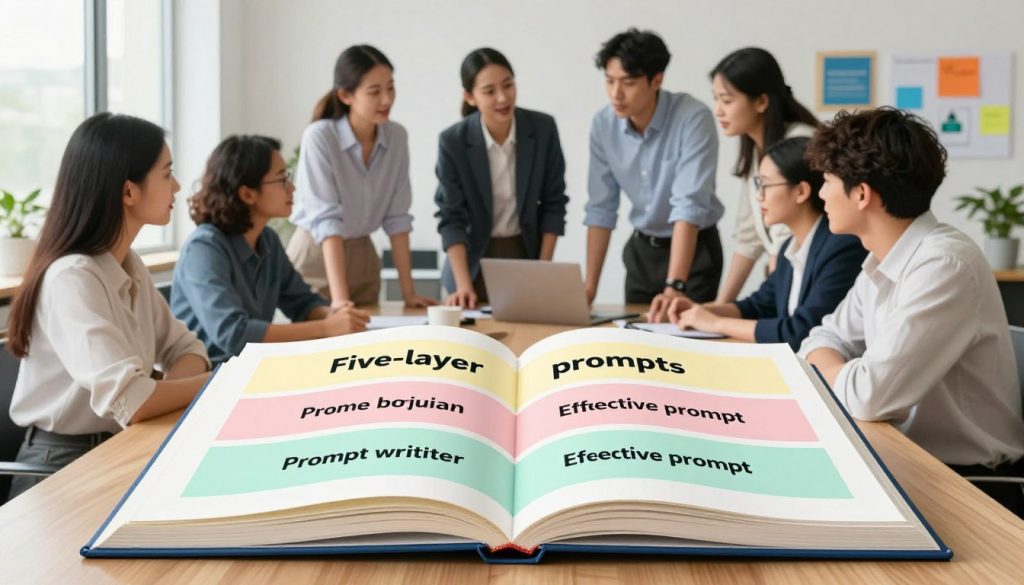
Use a clear five-layer framework to map every element of your generation. Each layer targets a specific decision the model must make: subject, action, setting, style, and technical modifiers.
The Five Layer Prompt Framework
Start with the subject and the main action. Put the most important words at the front to give the model priority cues. Then add setting and lighting to set mood.
Finish with style and quality tags to control artistic outcome and technical fidelity. Clear language improves quality across generators and tools.
| Layer | Primary focus | Example words |
|---|---|---|
| Subject | Who appears | woman, couple |
| Action | Pose or movement | embrace, reclining |
| Setting | Location and lighting | candlelit room, rainy street |
| Style | Artistic direction | cinematic, painterly, realistic |
| Technical | Quality and modifiers | 8k, film grain, sharp focus |
Essential Techniques for Character and Voice Consistency
Lock down personality cues in a Story Bible so your cast stays consistent during long projects.
Create short, specific character cards. Note speech patterns, favorite phrases, and emotional triggers. These items guide the model and prevent characters from becoming interchangeable.
When you craft nsfw prompts, include a couple of anchor lines from a character card. That helps the generator preserve dialogue and personality across scenes.
Use tools that let you store and update cards. A good generator can reference those cards during generation and keep dynamics stable.
- Define a woman’s physical traits and core motivations in one line.
- Keep a style anchor for narrator voice and reuse it.
- Update character cards after major arcs to keep long-term coherence.
Final rule: treat your Story Bible as a living file. Regular updates make the model follow consistent voices and deliver stronger content with fewer rewrites.
Mastering Pacing and Sensory Detail in Adult Fiction
You can shape intimacy by combining deliberate scene tempo with focused, sensory description.
Rhythm and Scene Architecture
Map beats: opening image, rising action, peak, and the cool-down. Keep scenes tight by planning where energy must grow and where it should ease.
Sudowrite’s Tone Shift modes (Romantic, Sensual) help you match sentence rhythm to mood. Use them to steady the pace and keep characters’ energy consistent.
Using Descriptive Features
Layer five-sense detail to ground a scene in the body. The Describe tool can generate touch, sound, and taste lines that make action feel lived.
Focus on small physical cues: a breath, a thumb press, the warmth of skin. These anchor the reader and heighten intimacy without overwriting.
Iterative Generation Methods
Work in short 200–400 word bursts. Generate, edit, and repeat. This method keeps quality high and saves time by reducing big rewrites.
- Provide preceding text so the model matches your style.
- Prioritize action and sensory beats over long exposition.
- Practice often to turn simple ideas into polished scenes with strong control.
Advanced Strategies for NSFW AI Image Generation
Advanced image generation relies on tool selection, clear subject cues, and sampler experiments.
Use proven engines like Stable Diffusion, Aitubo AI, or Flux when anatomical correctness matters. Pick a generator that supports high resolution and model checkpoints for better body detail.
Front-load your prompts with the subject and action. State the woman or lovers first, then add setting and lighting. This helps the model lock posture and touch before finishing style or quality words.
Experiment with samplers and resolution. Try different samplers to reduce artifacts and test higher resolutions for cleaner output. Small changes often fix the common glitches you’ll see in initial generations.
Be mindful of legal and platform rules in 2026. Deepfake regulations tightened, so confirm consent and check each platform’s content policy before you upload or distribute content.

- Keep language simple and descriptive to retain control over the final look.
- Use tools that store settings so you can reproduce consistent results.
- Iterate with small changes—this is a fun, efficient way to improve quality.
Common Pitfalls to Avoid During Generation
Small, targeted instructions prevent the model from wandering and keep your scenes sharp.
Over-prompting is one of the fastest ways to degrade output. Stacking too many quality tags or long modifier lists confuses the model and produces muddled results.
Avoid treating a prompt generator like a magic vending machine. Instead, give brief context about your characters and the moment you want to capture. That helps the generator focus on mood and action without guessing.
Many users waste time by listing what they do not want in the main text. Saying unwanted elements in positive words can cause the model to include them. Use concise negative fields for anatomy fixes.
Resolution matters. A woman can look odd if you ignore the native size the model expects. Match the model and generator settings to avoid distorted limbs or soft detail.
- Keep prompts concise and prioritize essential words.
- Use negative prompts for anatomy and artifact reduction.
- Give short character anchors instead of long backstories in every generation.
Learn these mistakes and you will save time and get steadier, higher-quality content.
Leveraging Specialized Tools for Better Results
Choose tools that match your creative goals and let the software handle routine detail.
Specialized platforms like Sudowrite are built to help you generate mature content with less manual fiddling. They store characters and ideas so you do not repeat setup every time.
Gianmarco published 270,000 words in a single year by integrating these tools into his workflow. That shows how a dedicated platform can scale your work without complex engineering.
Using a model trained for adult scenes often yields better results than a generic generator. You will spend less time on edits and more time on pacing and voice.
- Save characters: keep consistent profiles on the platform to preserve tone.
- Reuse ideas: stored snippets speed up your process and protect continuity.
- Pick the right tool: one that balances control and ease of use for repeatable quality.
This guide shows that combining your creative vision with specialized tools produces stronger, faster outcomes. Choose a platform that fits your needs and let it amplify your results.
Conclusion
You get better results when you give clear context and repeatable anchors. Keep subject, mood, and motion compact so the model follows your intent with fewer edits.
Move away from generic prompts and adopt specialized tools that store characters and settings. This helps you keep voice and pacing steady across long projects.
Iterate, refine in short bursts, and treat pacing as direction rather than command. Small cycles of generation and edit produce professional-grade work.
Always check legal rules and platform policies, and respect consent when creating adult material. With a structured approach and ethical practice, you can unlock your creative goals and finish stronger, faster.
FAQ
What core elements should you include in a brief for Section 1: "Prompt Writing Tips for Better CreateAIPorn Results"?
You should include the desired scene, character roles, emotional tone, explicitness level, and any style references like a photographer (Annie Leibovitz) or director (Pedro Almodóvar). Keep each element short and specific so the generator can prioritize. Use sensory anchors—touch, sound, movement—to make the scene feel lived-in without overloading a single line.
How does understanding the mechanics in Section 2 improve your results?
Knowing how models parse inputs helps you craft clearer instructions. Models favor concrete nouns, action verbs, and ordered constraints (e.g., “focus on voice, then pacing, then wardrobe”). When you map inputs to the tool’s strengths—language conditioning, length limits, and memory—you reduce unwanted artifacts and get outputs that align with your intent.
Why do generic instructions in Section 3 fail to capture intimacy?
Generic lines often rely on stock phrases that strip specificity. Intimacy lives in small, unique details: a scar, the cadence of speech, a shared joke. Without those, characters feel interchangeable. Provide private context and relational history so the scene reads like a moment between two known people.
What is the problem of clinical prose and how can you avoid it?
Clinical prose is sterile and descriptive without feeling. It lists anatomy or actions instead of conveying sensation and intent. Replace technical lists with metaphors, micro-moments, and bodily responses tied to emotion to regain warmth and immediacy.
How does contextual memory affect ongoing scenes?
Contextual memory lets the model keep track of relationships, props, and prior events. You should restate key facts succinctly at scene breaks and use consistent labels for characters and locations to prevent contradictions over longer generations.
What are the components of the Five Layer Prompt Framework in Section 4?
The framework layers: 1) Goal (what you want), 2) Cast (who’s involved), 3) Setting (where it happens), 4) Sensory Detail (how it feels), and 5) Constraints (tone, length, forbidden content). Order matters—start with the goal and stack the rest so the model applies them hierarchically.
How do you structure inputs for maximum creative control?
Use short labeled blocks (Goal:, Characters:, Setting:, Sensory:, Constraints:). Limit each block to one to three sentences. Include examples of preferred phrasing and a note on what to avoid. That structure reduces ambiguity and lets you iterate quickly.
How can you maintain character and voice consistency as described in Section 5?
Define each character’s vocabulary, rhythm, and motivation in a one-line profile. Reinforce voice by giving sample lines. When generating multiple scenes, include the profile at the top so the model can mirror mannerisms, slang, and power dynamics reliably.
What techniques improve pacing and sensory detail in Section 6?
Break scenes into beats: initiation, escalation, climax, cooling. Use short sentences to quicken pace and longer, image-rich lines for slow moments. Anchor the scene with tactile cues—temperature, texture, weight—to make description visceral without being verbose.
How does rhythm and scene architecture help scene flow?
Rhythm alternates sentence length and focus to mimic breath and movement. Scene architecture maps actions across time—establish, complicate, resolve—so each beat has a purpose. This reduces filler and keeps attention on emotional shifts.
What are useful descriptive features to include sparingly?
Pick two to three signature descriptors per character or location—voice quality, a recurring gesture, and a standout prop. Repeating those features creates cohesion; overuse makes the text repetitive. Aim for specificity over quantity.
What are iterative generation methods mentioned in Section 6?
Start with a short seed, review, and then expand in passes. Use targeted edits: one pass for dialogue, one for sensory detail, one for pacing. This lets you refine without blowing the model’s context window or losing consistency.
What advanced strategies work for image generation in Section 7?
For visual tools, combine reference images (photographers, lighting setups), camera specs (aperture, lens), and mood descriptors (warm, cinematic). Use negative constraints to avoid unwanted artifacts. Test multiple aspect ratios and sampler settings to find the visual energy you want.
What common pitfalls should you avoid during generation in Section 8?
Avoid vagueness, contradictory constraints, and overloading with tags. Don’t force too many stylistic demands at once. Also, watch for repetition and generic labels that dilute character specificity. Keep edits incremental to prevent destabilizing the scene.
Why is over-prompting dangerous?
Over-prompting scrambles priorities. When you give the model too many competing rules, it can produce inconsistent or bland output. Strip prompts to essentials and layer constraints across iterations instead of in one block.
Which specialized tools should you leverage as noted in Section 9?
Use fine-tuning platforms, tokenizer viewers, and model-debugging tools from providers like OpenAI and Stability AI. Visual editors such as Photoshop or Affinity help finalize images, and collaborative platforms like Figma speed review cycles. Choose tools that match your workflow and privacy needs.
