
Can one reference photo truly lock a face into place across dozens of creative variants?
You rely on visual continuity to build a brand and tell a clear story. Using Ideogram Character, you upload a single reference and guide future generations so your mascot or model keeps its look.
Face drift is the common pitfall when you make many variations. Advanced tools reduce that risk and help you keep the same facial features, expression, and style across images.
Prepare your reference image well, and you short‑circuit many retries. With the right model choice, you get repeatable results that serve social posts, ads, and portfolio work.
Key Takeaways
- Upload a strong reference photo to preserve identity across generations.
- Choose models that reduce face drift for reliable results.
- Well‑prepared images cut editing time and improve output quality.
- Consistent ai characters help build recognizable brand visuals.
- Use the right workflow to keep your character true to the original.
Understanding the Importance of Consistent AI Characters
Keeping one model’s look steady across many images makes your work instantly recognizable.
Character consistency means the image model locks a face, features, and identity across multiple generations. That lock keeps your mascot or talent identifiable in ads, episodic art, and game assets.
Most general image models skip an identity-preservation step. As a result, facial features can drift between versions. When faces change, your audience may not connect scenes or promotions to the same person.
Specialized tools solve this by anchoring identity data. They preserve facial landmarks and style markers so the character stays true, even when you change pose, outfit, or lighting.
| Feature | General Models | Specialized Tools |
|---|---|---|
| Identity preservation | Limited | High — dedicated retention |
| Face drift risk | Common | Minimal |
| Use case fit | One-off images | Branding, animation, episodic work |
| Control over style | Basic | Fine-grained |
For your projects, pick a workflow that emphasizes character consistency. This will save time and keep your visual narrative coherent across campaigns.
How AI Models Maintain Identity Across Generations
Keeping one face steady through many outputs lets viewers instantly recognize your work.
The role of identity preservation
Some image generators lock identity data from your reference photo so the same facial landmarks appear in each output. Ideogram Character, for example, uses your reference image to anchor features and reduce drift across generations.
The Role of Identity Preservation
Dedicated character generator workflows add an identity‑preservation step. This step stores shape, expressions, and style markers so the model reproduces them in studio portraits or cinematic scenes.
Why Face Drift Occurs
Face drift happens when a model lacks that preservation stage. Without it, the image generator may change facial structure between generations.
OpenArt avoids this with strong models like Nano Banana Pro, Seedream 4.0, and Kling 3.0 Omni. CGDream can even copy a photo and build a 3D model in about 90 seconds, saving you time when you need many variations.
“Use dedicated tools to keep identity across scenes and formats with minimal rework.”
Preparing Your Reference Images for Optimal Results
A clean reference photo is the foundation for reproducing a single face across many outputs.
Best Practices for Lighting and Angles
Use a well-lit, high-quality JPG or PNG with a simple background. Clear facial features help the model read bone structure and shading.
Choose frontal or 3/4 views. These angles reveal facial landmarks. Avoid extreme poses, heavy filters, or low-resolution shots that reduce control over the final output.
Adjust masks to include or exclude hair, glasses, or accessories. Masking gives you better control and improves character consistency when you change style or outfit.
- Keep expressions neutral and eyes visible for easier matching.
- Use plain backgrounds for quicker 3D reconstruction and higher quality results.
- Provide matching JPG/PNG files at the best resolution available.
“Prepare fewer, stronger reference images to reduce rework and get reliable results.”
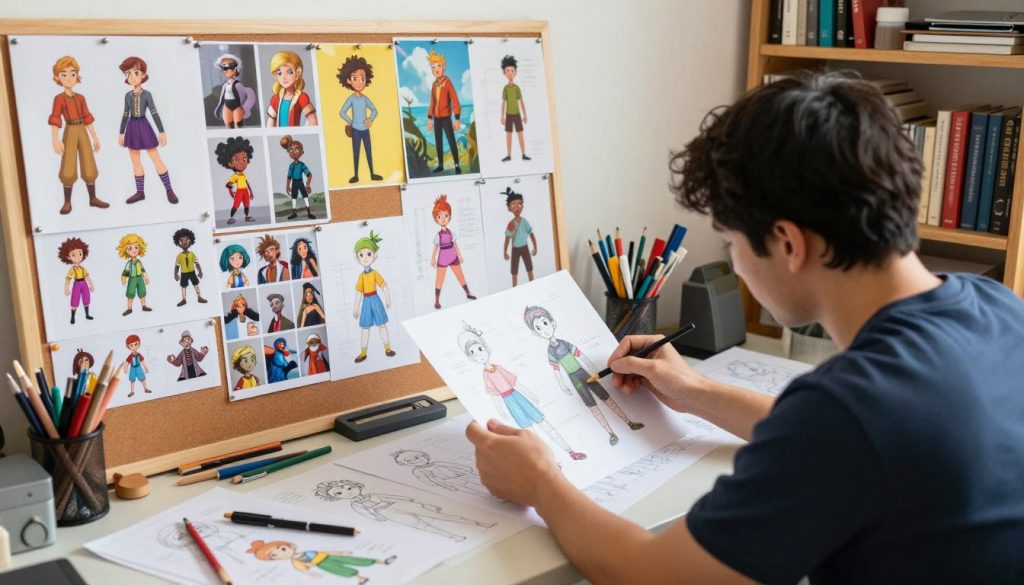
Step by Step Guide to Creating Consistent AI Characters
A stepwise process helps you reproduce a single face across many scenes.
Start by uploading a high-quality reference photo in the Character tab on Ideogram. This free service on ideogram.ai and the iOS app sets the visual base for your character’s identity.
Use templates to speed creation. Pick a theme—fantasy, sci‑fi, or studio portrait—then write a clear prompt and click “Generate” to make your first image.
- Upload the reference photo and name the model so the generator remembers it.
- Choose a template or preset that matches your idea and scene.
- Write a detailed prompt: mood, outfit, lighting, and expressions.
- Click Generate and review results. Save versions that match quality goals.
For enhanced results, combine Magic Fill or Remix to tweak hair, props, or background. OpenArt and similar services offer a clear workflow to build persona files and speed future generations.
“Prepare a strong reference, then iterate with targeted prompts for reliable results.”
Leveraging Advanced Features for Better Control
Precision tools help you preserve a photo’s key traits as you generate new versions.
Using Masks for Precision
Masks let you include or exclude hair, jewelry, or clothing. That gives you tight control over which parts of the photo the generator changes.
Use masks to freeze facial areas while swapping outfits or backgrounds. This reduces rework and improves final quality.
Applying LoRa Style Filters
LoRa filters add artistic effects without erasing the base likeness. Apply a filter to enrich design, boost image quality, or try a vintage look.
Combine filters with a reliable base model like Flux Dev or Stable Diffusion for predictable results across generations.
Adjusting Prompt Guidance
Prompt Guidance controls creativity. Higher values yield more detailed, higher-contrast models. Lower values keep outputs closer to the reference.
Use the Seed setting to create multiple variations while holding the core concept steady. Advanced users pair seeds, masks, and filters to create consistent character sets with minimal credits and faster workflow.
“Lock key traits, then iterate—this is the fastest route to reliable character generation.”
Comparing Character Reference and Style Reference
Deciding whether to copy a look or a likeness shapes every generation you make.
Use a style reference when you want a specific vibe, palette, or composition. A style reference borrows mood and art direction without tying your image to a single person.
Use a character reference when you need the same person across multiple images. This preserves identity and lets your audience recognize the model in different scenes.
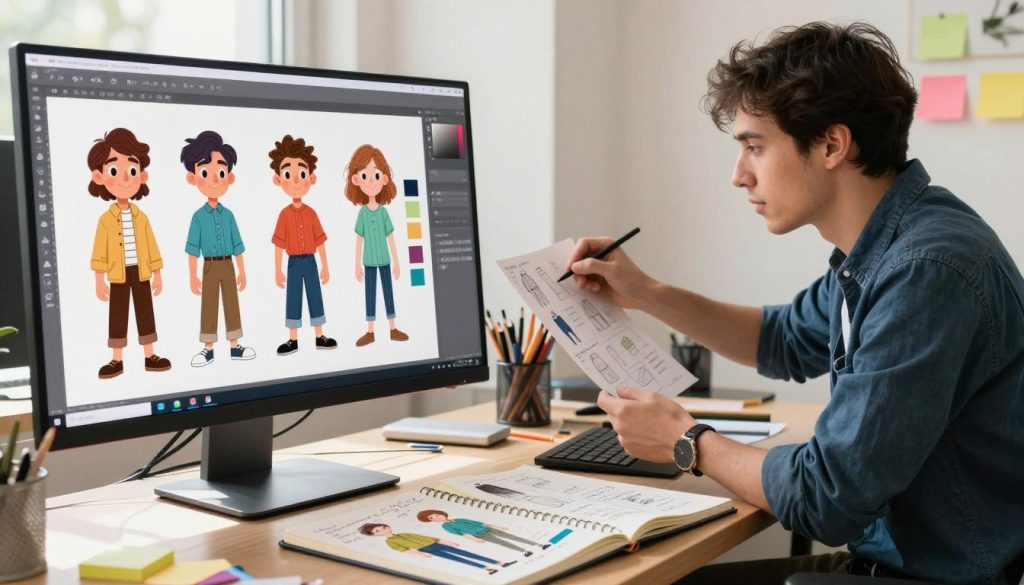
The character generator in most tools lets you switch between these modes. That switch gives you fine control over how much identity the model keeps versus how much it borrows from style.
“Choose the reference type that matches your goal: vibe or identity.”
- Style reference = visual direction, not identity.
- Character reference = repeatable identity across variations.
- Use the right tool settings to balance control and creativity.
| Use Case | Style Reference | Character Reference |
|---|---|---|
| Main goal | Vibe, palette, composition | Identity, facial landmarks |
| Best for | Art direction, mood boards | Brand mascots, episodic images |
| Control level | High over look | High over identity |
Professional Use Cases for Your AI Creations
A repeatable digital persona saves time and keeps your campaigns looking professional.
If you run marketing work, a reusable model is a practical asset. Freelancers and businesses use generated visuals for marketing materials, social campaigns, website art, and product packaging.
Marketing and brand mascots
Build a mascot or spokesperson that appears across ads and social posts. The generator lets you change outfit, background, or mood while preserving the core identity.
For short films and episodic content, use a single persona across scenes to avoid visual mismatches. Reusable models cut the time you spend fixing facial or style errors in post.
“A single persona frees you to focus on storytelling and scene design rather than endless corrections.”
Practical benefits at a glance:
- Faster creation and fewer revisions.
- Lower credit and support overhead per project.
- Improved quality and clear identity across materials.
| Use Case | Primary Benefit | Typical Output |
|---|---|---|
| Marketing campaigns | Brand recognition across formats | Ads, banners, packaging images |
| Social media | Fast, repeatable posts | Stories, reels, profile art |
| Story-driven projects | Visual continuity between scenes | Animatics, frames, concept sheets |
Use a reliable character generator to generate consistent results and protect identity across projects. This lets you spend more time on design, expressions, and narrative quality.
Troubleshooting Common Output Errors
Small missteps in prompts or masks often cause the most visible generation errors.
Start by checking the prompt for unclear wording. If accessories are wrong or text is misspelled, add precise instructions and retry. You can usually fix these faults without heavy editing.
Adjust the character mask to freeze correct facial areas or remove incorrect props. For wrong glasses, hats, or jewelry, refine the mask and regenerate the image.
Use Magic Fill for small fixes. It helps clean edges, correct accessories, and tweak backgrounds after the first generation. If results still miss the mark, lower prompt creativity or change the seed.
“If you are not pleased with a result, readjust settings and generate new variations of your character.”
- Check prompt clarity and spelling.
- Modify masks to control identity and props.
- Use Magic Fill to refine details.
- Regenerate with adjusted settings or a new seed.
| Error | Quick Fix | When to Regenerate |
|---|---|---|
| Misspelled text | Rewrite prompt, use explicit spelling | If correction persists after one retry |
| Wrong accessories | Adjust mask, specify item placement | After mask and Magic Fill attempt |
| Identity drift | Lock facial area, reduce creativity | When model alters key features |
Note: OpenArt’s free plan gives 3,000 credits monthly (100 per day), so you can test fixes at low cost. Creators like Jon S. and Mathew K. praise these workflows for fast, user-friendly generation and reliable results.
Conclusion
A reliable portrait baseline reduces edits and speeds up production cycles.
Maintaining a consistent character across images keeps your brand clear and your workflow efficient. Prepare clean references, use masks, and pick tools that lock identity so you spend less time fixing drift.
For marketers, animators, and creators, these methods let you scale visuals while protecting a single likeness. Test workflows, save presets, and iterate with purpose to get the best results.
Start experimenting today and watch how consistent characters transform your content into a cohesive, professional asset.
FAQ
What is the best way to keep a character’s identity across multiple CreateAIPorn images?
Use a clear set of high-quality reference photos that show the face and key features from several angles. Save these as a named reference set and use identical camera angles, lighting descriptions, and wardrobe notes in every prompt. Also lock in specific model settings and version numbers so generations stay uniform over time.
Why does face drift happen when you regenerate images?
Face drift occurs when the model receives slightly different inputs, or when sampler, seed, or model version changes between runs. Minor prompt edits, varying lighting descriptions, and inconsistent reference images make the model reinterpret facial proportions. Fixing those variables reduces drift.
How should you prepare reference images for the best results?
Choose sharp, well-lit photos with neutral backgrounds. Include front, three-quarter, and profile shots. Keep expressions and hair styling similar across the set. Avoid heavy retouching so the model captures natural facial landmarks and skin texture.
What lighting and angle tips improve identity preservation?
Use soft, even lighting to avoid harsh shadows that obscure facial landmarks. Keep the camera at eye level and maintain consistent distance from the subject. Document the setup (lens, focal length, and light direction) and repeat it in all shoots.
How do identity-preservation techniques work inside image-generation models?
Models compare your references to the latent representation they generate. Identity-preservation modules prioritize features like bone structure, eye spacing, and hairline so outputs retain recognizable traits. The more consistent the input, the stronger the preservation.
Can you use masks to control which parts of the image change?
Yes. Masks let you protect facial regions while allowing changes elsewhere, like clothing or background. Paint or generate a precise mask over the face to prevent edits, and use an expanded feathered edge to keep transitions natural.
What are LoRa style filters and how do they help?
LoRa (Low-Rank Adaptation) filters apply a learned style overlay that modifies colors, textures, or rendering without altering underlying identity features. Use them to keep facial traits intact while changing art direction, lighting, or clothing style.
How should you adjust prompt guidance to improve reproducibility?
Use fixed phrases for critical attributes (e.g., “almond-shaped eyes, medium nose bridge”) and avoid vague adjectives. Set a stable guidance scale and seed value. Include or omit artistic styles deliberately to prevent the generator from drifting toward different visual languages.
What’s the difference between a character reference and a style reference?
A character reference defines the subject’s physical identity—face, body proportions, scars, and wardrobe staples. A style reference defines the visual treatment—lighting, color grading, illustration technique, or photography style. Use both together: one for identity, one for look and feel.
How can you apply these methods for marketing and brand mascots?
Build a locked reference library that represents your mascot from multiple angles and in signature outfits. Standardize prompts and export settings, then generate campaign assets with version control. This keeps brand imagery cohesive across channels.
What steps help when creating character assets for storytelling or animation?
Start with a model-sheet approach: consistent reference shots, expressions, and poses. Create a naming convention for files and prompts. Use masked passes for separate elements (face, hair, clothing) so you can mix-and-match or animate without breaking identity.
What common errors reduce identity fidelity and how do you fix them?
Common errors include inconsistent lighting, mixed reference sets, and changing model versions. Fix them by consolidating references, documenting every generation parameter, and running A/B tests where you change only one variable at a time.
How do you maintain quality control across multiple creators or teams?
Create a style guide that lists must-have reference shots, prompt templates, forbidden edits, and export specs. Use shared asset repositories and version control tools such as Git or cloud file systems. Train team members on the documented workflow.
Are there legal or ethical considerations when making realistic image assets?
Yes. Obtain model releases for any real people used as references. Disclose synthetic content appropriately per platform rules and local laws. Avoid using protected trademarks or copyrighted designs without permission.
What tools help you track and reproduce previous generations?
Use a prompt manager, version-controlled prompt files, or software like ComfyUI, AUTOMATIC1111, or Runway that logs seeds, model versions, and parameters. Store reference images and metadata together so you can recreate exact outputs later.
How do you credit tools and creators when publishing generated images?
Follow the attribution guidelines of the model and any third-party assets. Note the model name and version, the tool used for generation, and list photographers or designers who provided references. Keep a credits file with each asset export.
